
Briefing 2025/26
Initial Situation
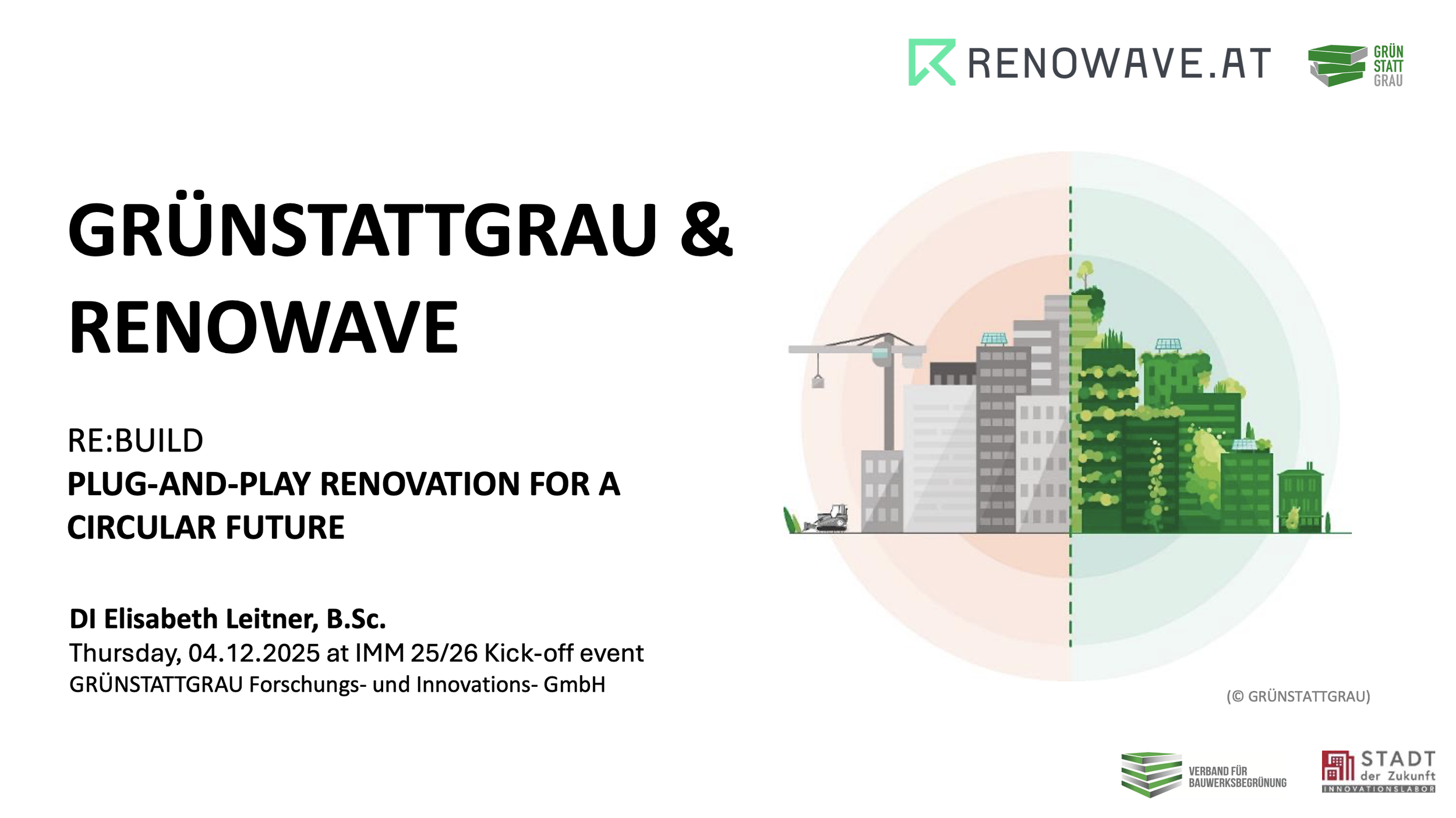
As part of the challenge, we are focusing on the further development of renovation in existing buildings. The aim is to map renovation processes in the same way as in vehicle construction – in other words, not only to make them more efficient and environmentally sustainable, but also to conceive them as plug-and-play solutions. To this end, recyclable materials should be used consistently, resource consumption should be reduced to a minimum, and greening concepts should be considered from the outset and implemented in an integrative manner. The challenge lies in translating technical innovation, material cycles, and ecological added value such as urban greening into a scalable renovation system.
Our Challenge
We are looking for solutions to further develop plug-and-play renovation so that it is not only energy-efficient, but also consistently recyclable and resource-efficient. We are looking for new material and system approaches, design principles, or business models that enable the use of reusable or biodegradable materials and integrate greening elements – such as facade or roof greening – into the renovation system.
In addition, completely new fields of application or business models in the area of recyclable renovation systems are also of interest, for example for neighborhoods, modular infrastructures, or temporary structures.
We envision solutions that are both technically scalable and economically attractive – and thus make a real contribution to accelerating the sustainable transformation of the building stock.
Our Goal
The challenge aims to produce tangible and reusable results – for example, in the form of a concept, a design, or an animated presentation of the approach as a plug-and-play solution. The development of a cooperation or business model is also conceivable. It is important to us that the results clearly show how plug-and-play renovation can be implemented in a way that is recyclable, resource-efficient, and, ideally, integrated with greenery – and what steps are necessary to bring the solution to market or put it into practice.
The Prospects
Support during the program: We actively support participants in developing their solutions – by phone, digitally, or on site. Expert know-how, workshops, and joint work meetings are available. If necessary, we organize visits to relevant reference projects or production sites. In addition, we provide access to existing market studies.
Continuation: Depending on the initial situation, results, and mutual interest, we can also imagine continuing our collaboration with participants. Under the right conditions, this could take the following forms, for example:
Joint further development of the solution and support during the term of the project for innovation processes, including through funding projects
Integration into the team (e.g. via master's thesis)
Cooperation with existing companies
We deliberately keep this point open, as both the quality of the results and the team dynamics are individual. What is important to us is that if a solution has potential – both technically and personally – we will work together to implement it.
The Process
Start: After the kick-off event, the process begins with an initial exchange to align needs and potential. This can be arranged flexibly – for example, through a brief email exchange, an initial one-on-one meeting (by phone, virtually, or on site), or alternatively, a small group meeting or a joint kick-off workshop with several interested parties. In this context, the task is discussed in detail once again, expectations and possibilities of the participants are compared and, if possible, initial solution ideas are considered. On this basis, it is possible to quickly decide whether and in what form further cooperation makes sense – including the scope and setup for the next phase.
Duration: The 5-month co-creation process should be structured but flexible. We suggest a mix of regular exchange formats and needs-based collaboration.
Recurring meetings – e.g., every 2–4 weeks, depending on progress and needs (on-site or virtually)
Ongoing communication via a shared chat tool – for quick coordination and spontaneous ideas
We are deliberately keeping the schedule open, as experience has shown that it is only during the ongoing process that it becomes clear who is participating at what pace and to what extent. What is crucial is not so much a rigid structure as a continuous, constructive exchange – and a shared focus on a strong result.
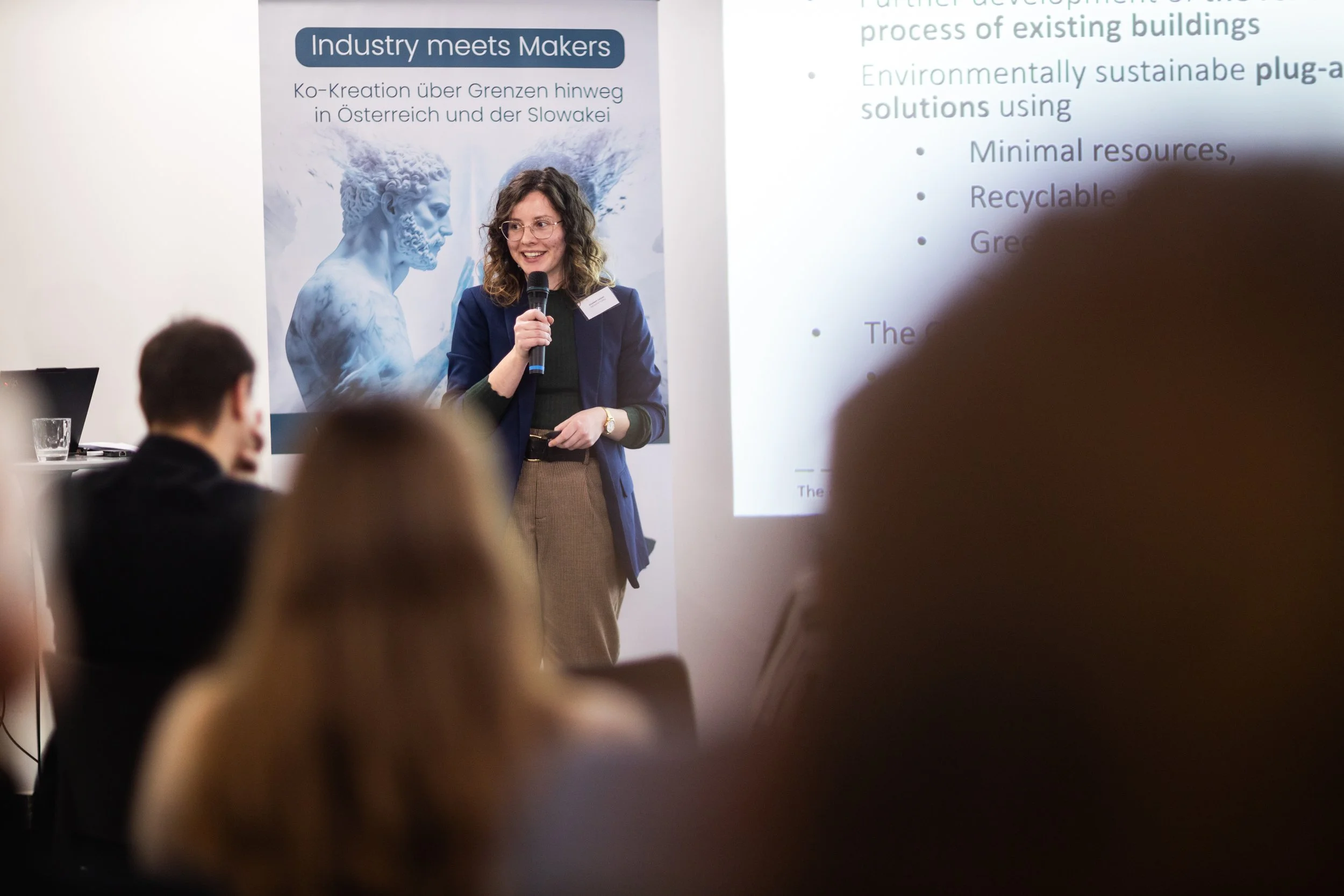
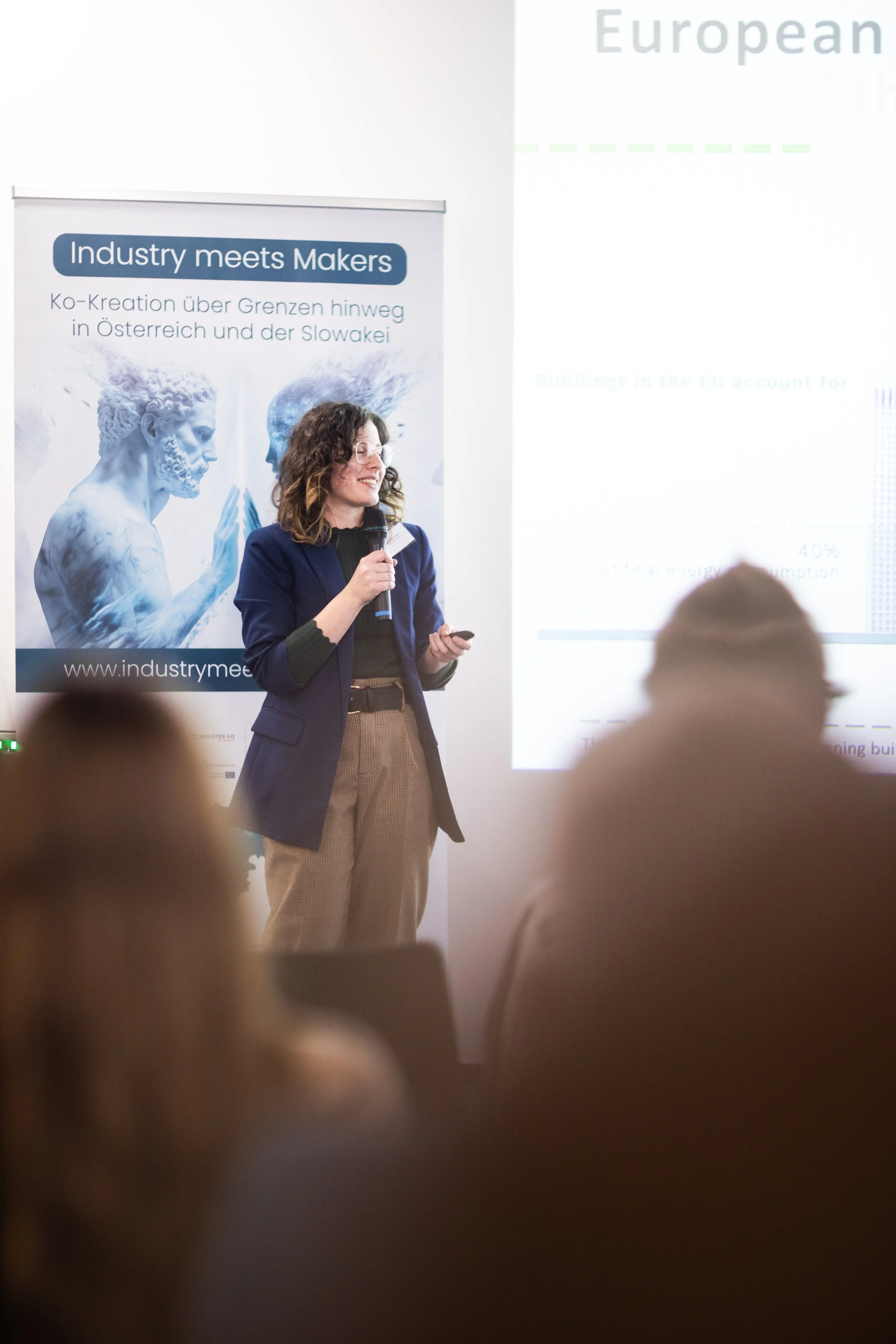
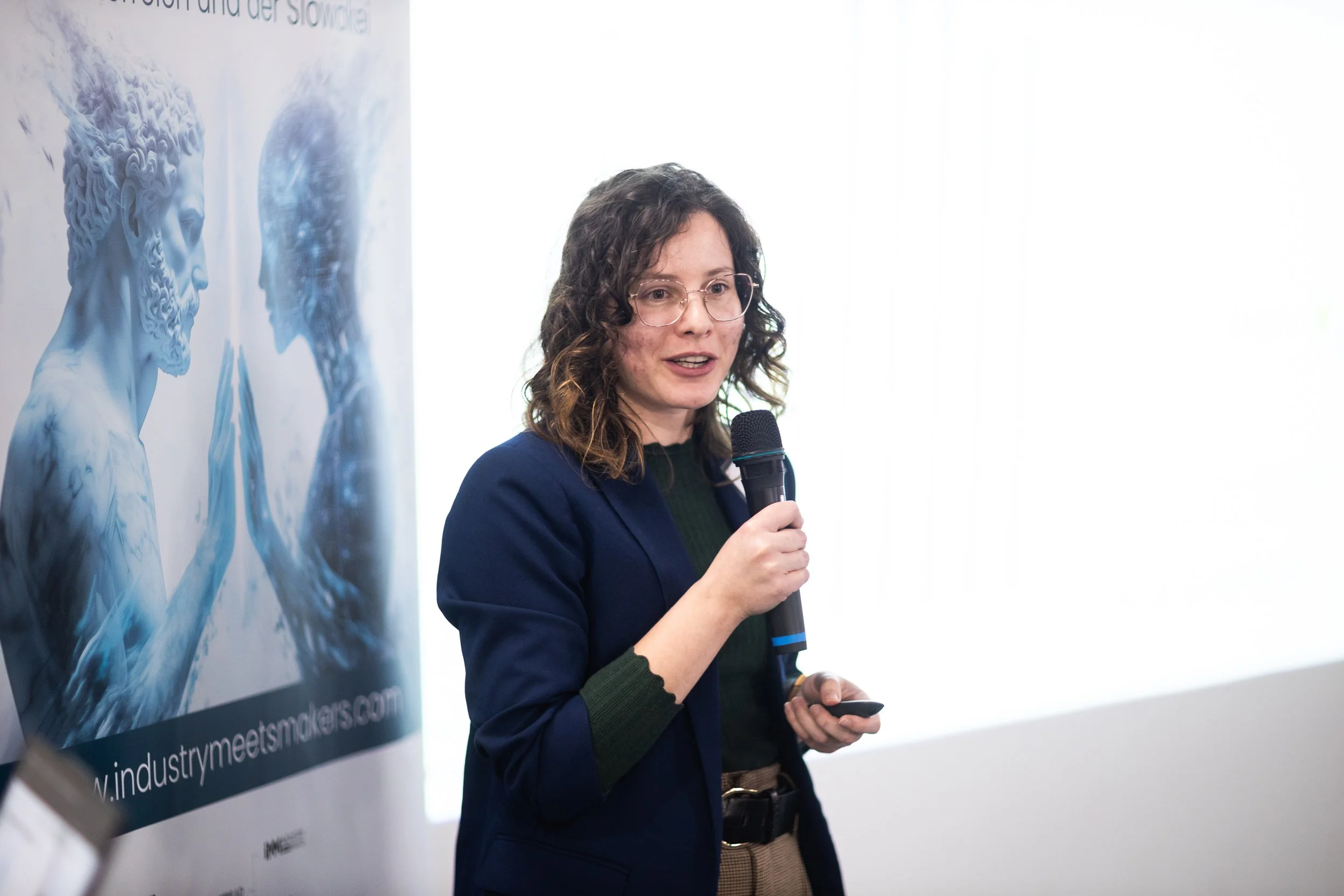
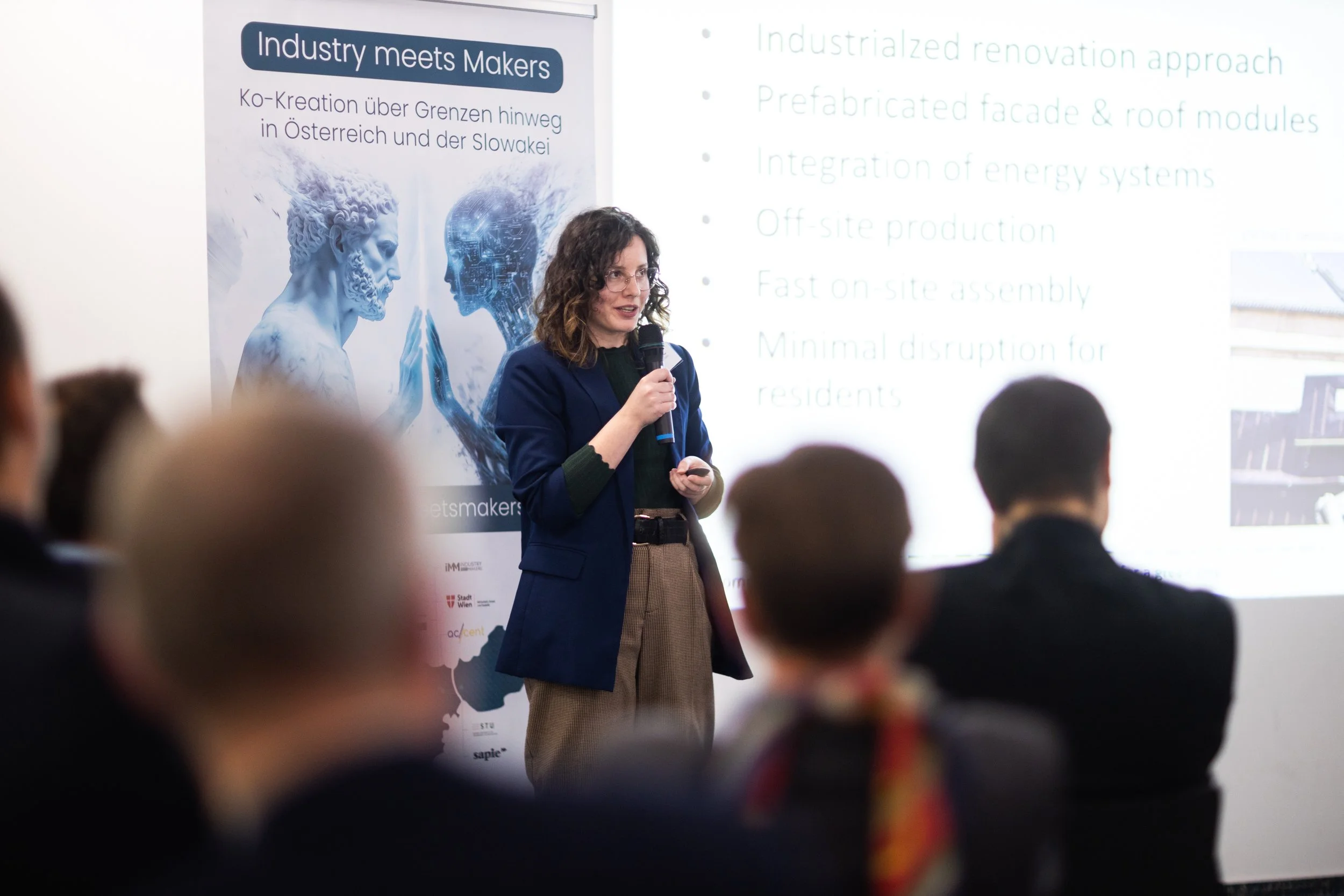
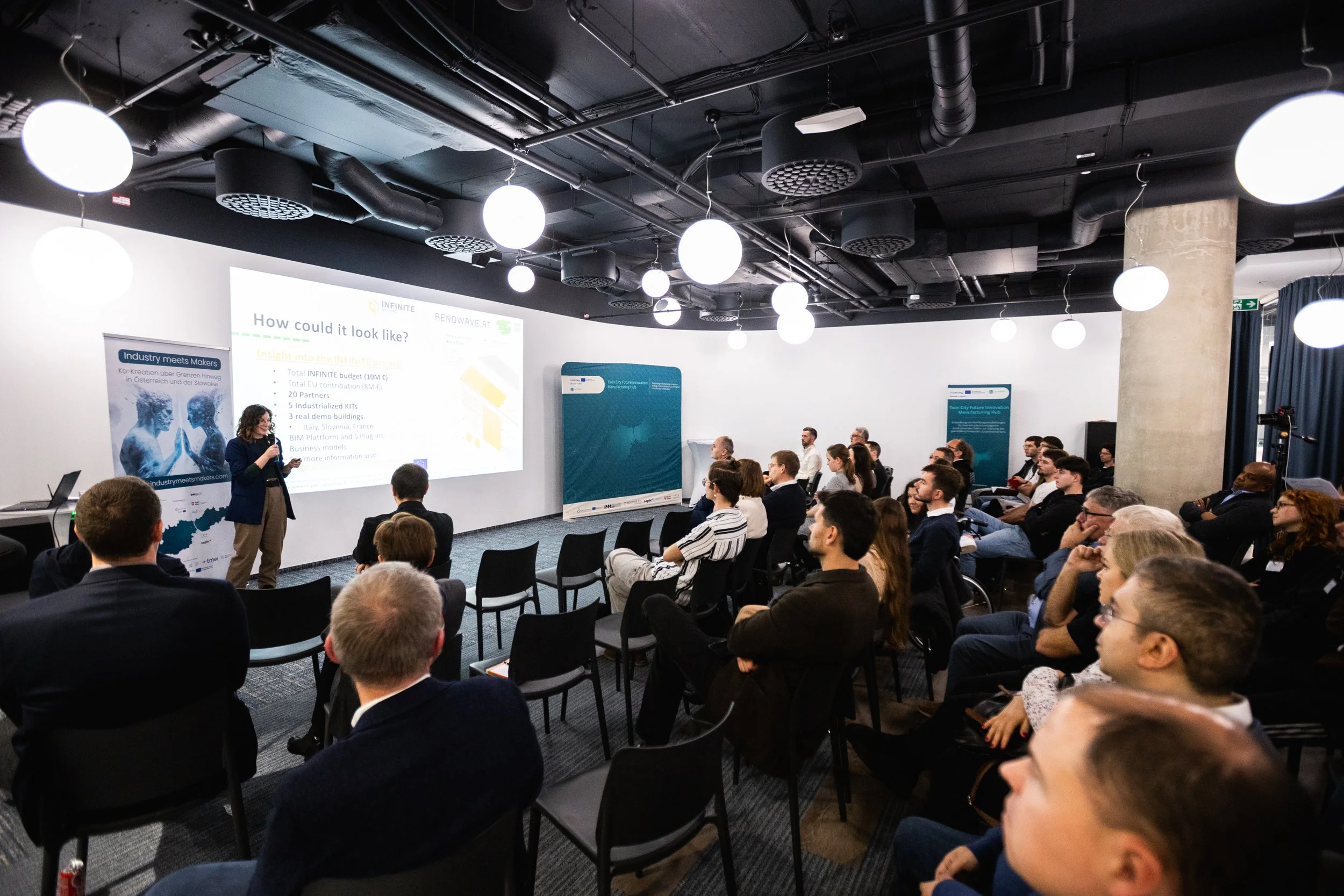
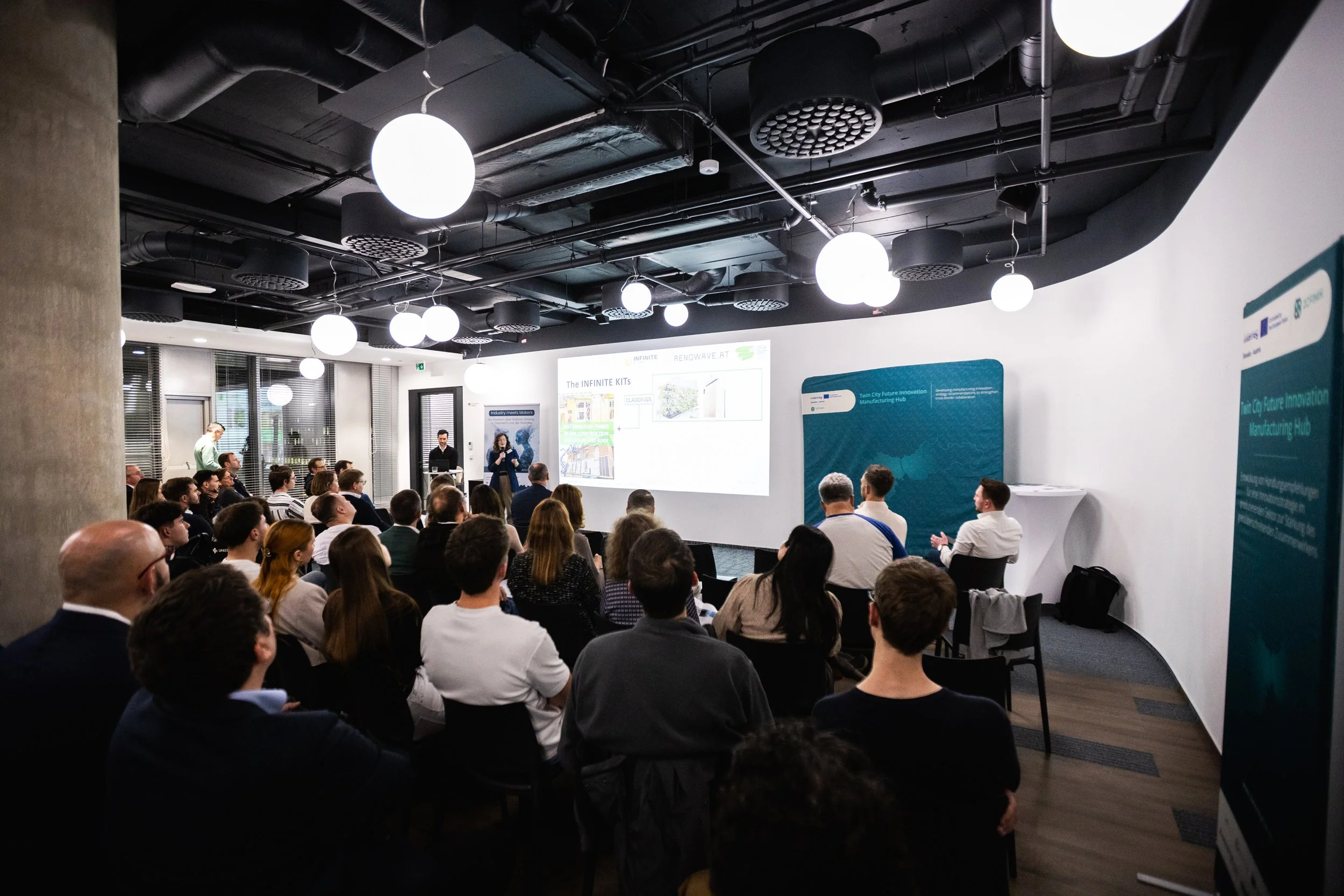
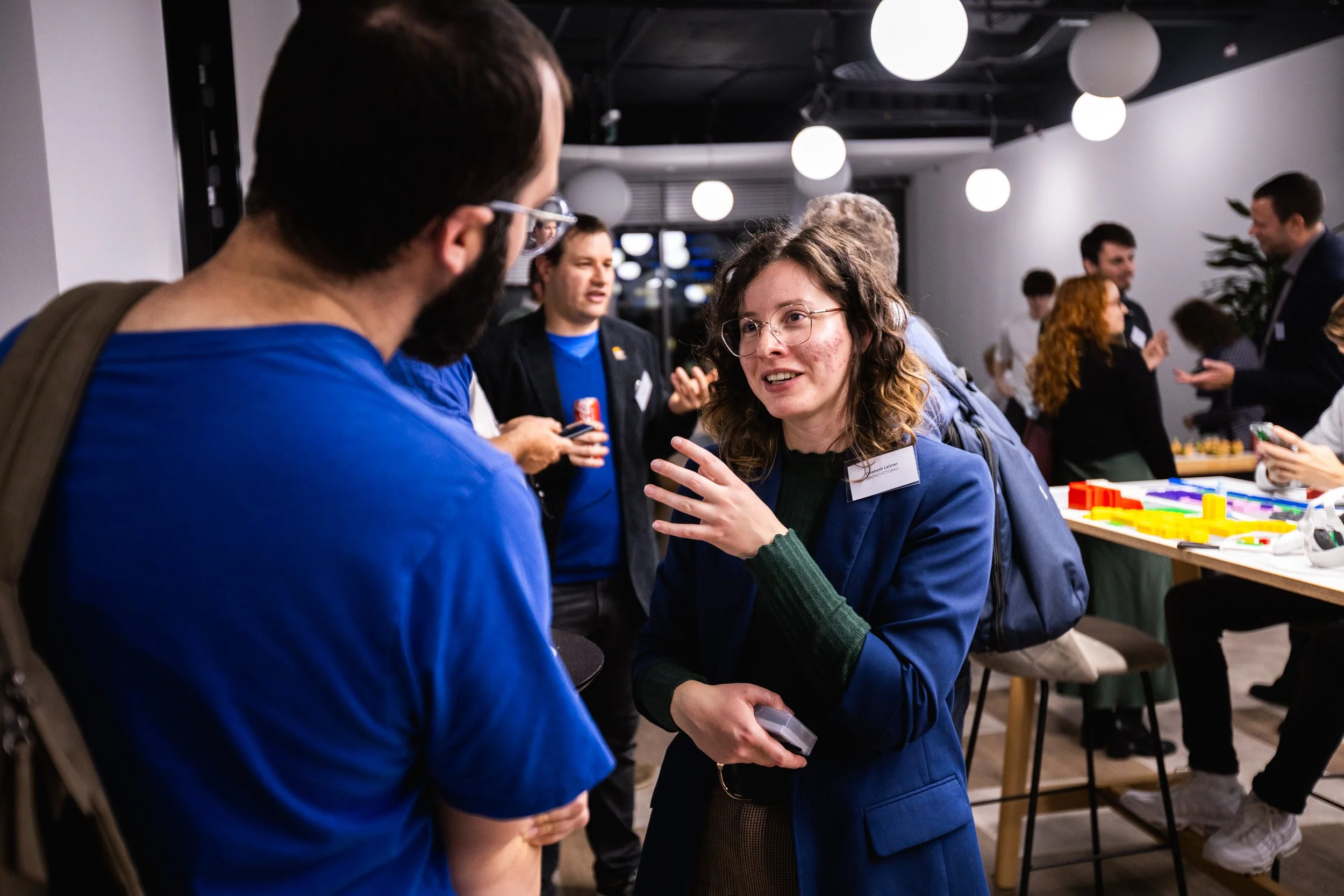
#IMM2025 Kick-off in Bratislava
Video Recording

Your contact persons
Susanne Formanek
GRÜNSTATTGRAU & RENOWAVE
Board of Directors & Co-Founder
LinkedIn
Elisabeth Leitner
GRÜNSTATTGRAU
Project Management
LinkedIn
About us
GRÜNSTATTGRAU
GRÜNSTATTGRAU is Austria’s competence and innovation lab for building greening (e.g., green roofs and façades). The platform connects stakeholders from business, research, and public administration, provides expertise, consulting, and training, and – together with a network of 300+ partners – drives the implementation of greener, smarter cities.
More details about GRÜNSTATTGRAU
RENOWAVE
RENOWAVE.AT is the innovation lab for climate-neutral building renovation and district renewal across Austria. As an independent hub, it supports initiators of demonstration buildings and districts, accelerates high-quality retrofits through innovation, and was founded in 2022 as a cooperative.
More details about RENOWAVE
Further briefings
#IMM2025/26 Briefings
Alstom – Presence Detection for Safer Trains
Alstom – Vibration-Based Fault Detection for Motor–Gearbox Units
Alstom – Predicting Remaining Useful Life of Train Battery Systems
AM Austria – Sustainable Industry Hack – CO₂ Footprint Optimizer for Additive Manufacturing
BeKa Software – HVAC Automation with Waste Heat Recovery
BeKa Software – Intelligent Natural-Language Interface for Open-Source CRM Systems
City of Vienna – Smart Asset Tracking for Commercial Waste Containers
GRÜNSTATTGRAU & RENOWAVE – Re:Build: Plug-and-Play Renovation for a Circular Future
NEOALP – The Human Touch: Designing the Next Generation of Humanoid Robots
Slovak Centre for Productivity – Build the Smart SME of Tomorrow: Odoo x Digital Twin Challenge @ INFINITY LAB
Smander.com, IoT-Austria & Mariahilfer i – Back in Control: The Open Appliance Maker Challenge